
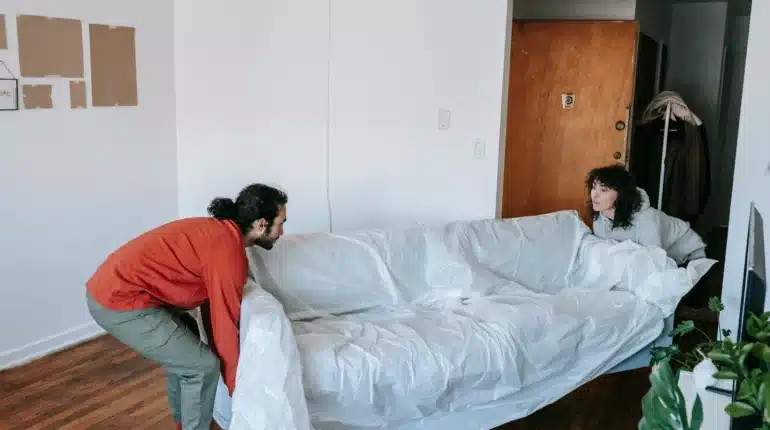
Most professional painters move large furniture into the centre of the room and cover it with drop sheets, cover your floors with drop sheets, and remove door hardware and switch cover plates. Homeowners usually need to empty bookshelves and cabinets, clear small items, ornaments, wall art, and valuables.
Every painter is a little bit different, so confirm who does what before the job starts. Below is a breakdown of what the crew typically handles, what you’ll usually be asked to do, and a checklist to work through before painting day.
What the George.Painting Crew Typically Handles
On an interior repaint job, here’s what you can expect the painters to do:
- Move larger furniture such as couches, beds, tables and cabinets away from the walls, usually into the middle of the room
- Cover furniture, kitchen cupboards and benchtops with clean plastic sheets, and tape the floors with suitable film (depending on the floor type), or cover them with a drop sheet.
- Mask the inside of wardrobes with plastic to keep dust away from the clothes if we are not working inside them. Remove and refit door handles, window accessories when painting doors and windows, and switch and power point cover plates.
- Putting furniture back, vacuuming the place, cleaning up and taking away all the rubbish and leftovers at the end of the job.
- Leave the touch-up kit with 500 ml of each colour used on the job, sealed properly to last, in a tidy box that fits on a small shelf.
If you are planning on replacing any of the door or window accessories that we are removing, we are more than happy to fit the new accessories free of charge, assuming the new accessories don’t require any modification and are the same size as the existing ones
On an exterior repaint job, this is what you can expect the painters to do:
- Covering outdoor items they can’t move, such as air conditioning units, pavers and garden beds near the walls.
- When sanding old weatherboard cladding, or when sanding is expected to generate a lot of flaked paint and dust, we tape and lay plastic to cover the floor, catch falling dust and flaky paint, and prevent it from getting into your garden.
- Move outdoor furniture and cover it with clean plastic when painting near the furniture.
- Clean the work area daily.
What Homeowners Are Usually Asked to Do
On an interior job:
- Clear small items, ornaments, photos and valuables
- Take down wall art, mirrors and curtains
- Empty bookshelves and display cabinets so the painters can move them and anything stored against the walls
- Arrange for heavy specialist items to be moved by someone qualified, a pool table for example (recommended to check first as the painters might be able to work around the table without moving it)
- Secure pets and sort out parking and access; the painters need at least one car parked onsite for access to tools and consumables.
On an exterior job:
- Provide clear access to all surfaces to be painted around the house; move belongings and cars as needed.
- Do all gardening, including cutting hedges and trees as required, to provide enough clearance for the painters to position ladders or other access platforms.
- When painting doors and windows, unlock doors and windows and keep them open until they dry so they don’t stick to the frame. Drying time can vary from 2 to 8 hours, depending on temperature and the product used.
Your Pre-Arrival Checklist
1. Confirm the scope and who moves what
About a week before the job, confirm what furniture they’ll move and what they expect you to clear. Ask whether they’ll be working room by room or across the whole house at once, so you know which rooms need to be ready first.
At George.Painting, we’ll usually split a full interior repaint into two stages. We do the bedrooms, living area, and bathroom in the first week, starting on a Tuesday or Wednesday. Depending on how much work is in the first stage, you’ll be able to move back into the finished space over the weekend, and we’ll return on Monday to do the rest of the house.
2. Clear small items and valuables
Pack away ornaments, photo frames, lamps, plants, electronics, jewellery and anything breakable or valuable from every room being painted. Painters work around a lot of furniture, and small items are most likely to be knocked over or misplaced. Most painters won’t move them for this reason.
Check with the painter what they are happy to handle. We usually ask you to leave all couches, beds and dining tables in place.
3. Empty bookshelves and cabinets
Freestanding bookshelves, display cabinets, and wardrobes usually need to be moved away from the wall, and they’re unsafe to move when full. Empty them before the crew arrives. If you’re painting built-in cupboards or wardrobe interiors, empty those too.
We usually recommend putting all clothes on the beds, and we’ll cover the bed with clean plastic sheets.
4. Take down wall art, mirrors and curtains
Remove pictures, mirrors, clocks and wall hangings, and take down curtains and blinds where they’ll be in the way. Keep the hooks and screws together in a labelled bag if you want them back in the same spots, and tell your painter whether you want the holes filled or left for rehanging.
A repaint is a good opportunity to arrange your picture frames and decorations. We usually ask that you leave the picture hooks in place. Just remove the frames, then mark the hooks you’d like removed and patched, or the ones you’d like us to leave.
5. Move what you can, and leave heavy items to the crew
Moving small furniture out of the rooms being painted saves time on the day. Leave large or heavy pieces for the crew to shift and cover, so nobody is injured and the furniture isn’t damaged. If you have spare space in a garage or a room that isn’t being painted, move furniture into it to give the crew more room to work.
6. Arrange specialist removals in advance
Painters generally won’t move pianos, aquariums, gun safes, pool tables or wall-mounted TVs. Book a removalist or the right tradesperson to handle these before painting day, or ask your painter whether they can leave the walls behind them.
7. Clear kitchen and bathroom surfaces
Clear windowsills in kitchens, bathrooms and laundries. Put away toiletries, appliances and anything sitting against the walls being painted. If you’re painting a bathroom, keep the room ventilated and avoid long hot showers for the first few days after painting.
We usually don’t mind things left on the benchtop as we will cover the bench and everything on it with clean plastic.
8. Clear the outside of the house for exterior jobs
Move pot plants, outdoor furniture, barbecues, bins and toys away from the walls. Trim back shrubs and vines touching the house so the crew can reach the surfaces. Turn off sprinklers and irrigation near the walls for the job, and move cars away from the house if the walls are being pressure washed or spray painted.
9. Secure your pets
Keep pets away from the work area for the whole job. Wet paint, open doors and gates, ladders and painting materials are all hazards, and paw prints in fresh paint are hard to fix. Keep dogs secured in a part of the yard away from the work, and let your painter know if any gates need to stay closed.
10. Sort out parking and site access
Make room for the crew’s vehicle close to the house, ideally in the driveway, as painters bring ladders, drop sheets and a lot of paint. Let your painter know about gate codes, keys, alarm systems, and where they can access water and power. If they’ll need a bathroom, tell them which one to use.
11. Plan where you and your family will be
If you’re living in the home during the job, work out which rooms you’ll use each day and where everyone will sleep. Ask your painter to schedule bedrooms so nobody has to sleep in a room painted the same day. If anyone in the household is sensitive to paint smells, talk to your painter about low-odour products.
We can use low-VOC products and keep dust to a minimum with a full setup of the best Festool dust extractors and sanders on the market.
12. Finalise your colours
Have every colour and finish decided before day one. Colour changes after the job starts can mean extra coats, extra cost, and delays
We offer a complimentary colour consult to help homeowners choose the colours and finishes.
13. Plan maintenance and home improvement:
Whether you’re getting light fittings removed or adding a new fan, most electrical work should be done before painting.
If you’re considering replacing your carpet, we recommend removing it before painting and getting your new flooring installed after the painting is finished. Most carpet layers don’t like splitting the job, but our team can cut 100mm around the skirting, paint all the way down to the floor, and you can replace the carpet after the repaint is finished.
If you’re laying hard floor or tiles, you may need to remove skirting boards, and the existing skirting may not be reusable. Check with the floor installer and the painter before locking in a schedule.
After the Painters Leave
Most crews put furniture back before they finish. Wait before rehanging pictures, pushing furniture hard against the walls or scrubbing anything clean, as paint can be dry to the touch within hours but take much longer to fully cure.
We leave a small touch-up kit on every job, with 500 ml of each finish colour used. Each container is labelled with the product, colour name and sheen level, making future touch-ups easy.
Why Preparation Speeds Up the Job
Rooms that are cleared before the crew arrives can be prepared and painted from day one. When the crew has to pack up shelves and work around clutter, the job takes longer, and on some jobs that time is charged as extra labour. Our house painting timeline guide explains how long a typical interior and exterior job takes and what affects it.
Check the Quote Before the Job Starts
A detailed quote should tell you what protection and furniture moving is included, so there are no surprises on painting day. Our quote guide covers what a professional painting quote should include.
If you’re planning a repaint in Newcastle or Lake Macquarie, get in touch with George.Painting for a quote, and ask us any questions about preparing for the job.