
When you’re comparing painting quotes, you might be looking at documents that don’t contain the same information. One is itemised line by line, while another is just a number you got via text message. When the quotes look that different on paper, price becomes the only comparison point, and that’s exactly how underquoting wins jobs it shouldn’t.
A professional painting quote should answer specific questions before you have to ask them. It should cover surface preparation, the number of coats, the paint brand, product line and sheen level, a clear list of inclusions and exclusions, any access or scaffolding requirements, and GST shown separately. If any of those elements are missing, the quote is incomplete, and the gap is usually where the cost savings are hiding.
Surface Preparation
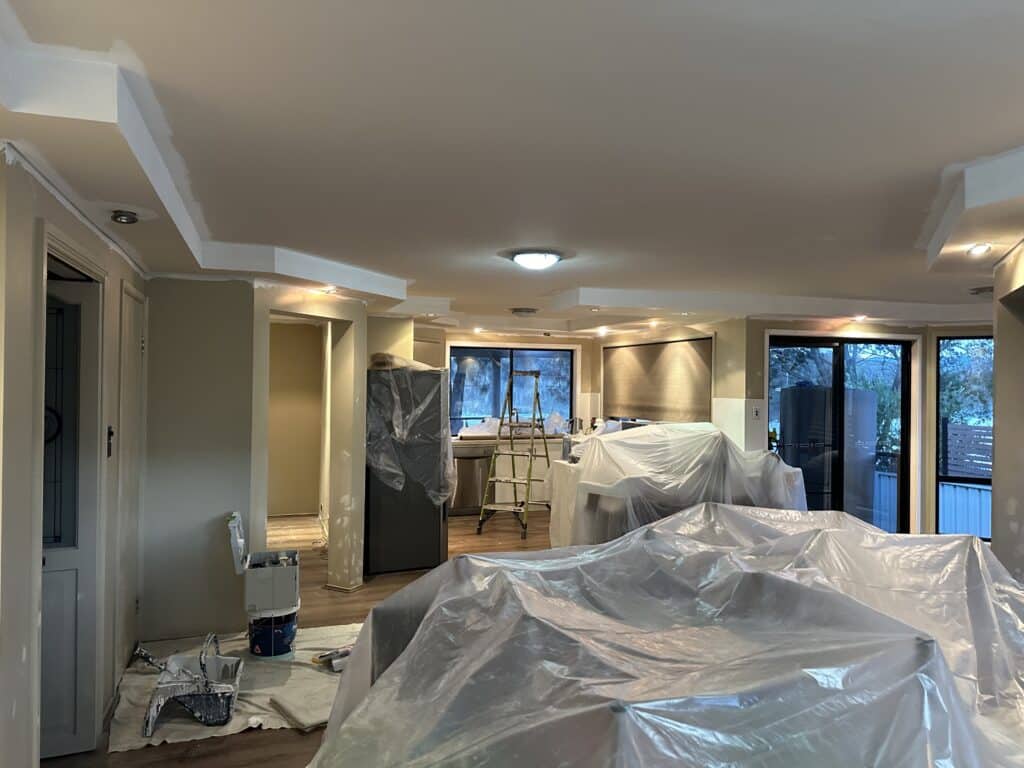
Surface prep is the biggest variable between a cheap quote and a quality one, and it’s the line item most likely to disappear from a vague document. Plenty of work goes into your surfaces before the first coat goes on, and proper prep covers everything from washing surfaces to filling cracks and sanding back any old or peeling paint.
Because we’re so close to the coast, salt residue is a real factor. It builds up on exterior surfaces and interferes with paint adhesion if it’s not thoroughly washed off first. A painter who doesn’t mention this in their prep process either isn’t doing it or hasn’t thought about it.
A quote that specifies prep by surface type (exterior walls washed and sanded, bathroom ceiling mould-treated and primed, timber window frames filled and spot-primed) is a sign the painter has actually assessed the job. A quote that bundles prep into a single line or doesn’t mention it at all is telling you something too. We treat prep as a non-negotiable part of every job, not a cost to skip.
Number of Coats
Two coats is the industry standard for residential painting work. A single coat is one of the most common reasons a cheap paint job eventually fails. If you see a quote that doesn’t specify the number of coats at all, assume it’s one until proven otherwise.
Significant colour changes can require even more coats to achieve even coverage. Fresh plaster is absorbent and will drink the first coat, often needing a third pass to reach the specified finish. Feature walls with bold or saturated tones are similar. A painter quoting accurately will note these circumstances in the document and explain why the coat count differs by surface.
Paint Brand, Product Line and Finish
There’s a meaningful difference between trade-grade products and retail alternatives in the same brand’s range. A quote that says “Dulux” without specifying which product line and what sheen level is being used isn’t complete.
Sheen level matters as much as product grade. Flat finishes hide surface imperfections but don’t clean well and aren’t suited to high-traffic areas. Low sheen is the most common choice for residential interior walls to balance durability and appearance. Semi-gloss and gloss are durable and washable, making them great for trims, doors and wet areas, but they’re unforgiving on surfaces that aren’t well-prepared. A painter who recommends a specific sheen for a specific surface and can explain why knows what they’re doing.
As Dulux Accredited painters, we know how to match the surfaces and conditions around your home to the right product every time.
Inclusions and Exclusions
What a quote covers and what it doesn’t are equally important, but exclusions rarely get as much attention as the total at the bottom of the page. Common exclusions that catch homeowners off-guard include furniture moving, rubbish removal, trim and eaves that weren’t explicitly listed in the scope, and second-storey or hard-to-reach surfaces that weren’t discussed during the site visit.
An itemised quote lists both sides. The inclusions tell you exactly what’s being done and to which surfaces. The exclusions tell you what’s out of scope, so there’s no dispute mid-job when something turns out to be missing.
At George.Painting, we make sure the scope is never ambiguous. If something comes up during the job that wasn’t covered in the original document, we discuss it before the work is done, not after the invoice arrives
Access and Scaffolding
For two-storey homes, high exterior eaves, or any surface that can’t be safely reached from a standard ladder, access is a real cost and a real safety consideration, and a quote that doesn’t address it hasn’t been properly thought through.
Scaffolding, elevated work platforms, and scissor lifts all have hire costs that should be visible in the quote. If the quote covers a two-storey exterior repaint and there’s no mention of how the upper sections will be accessed, ask. The answer tells you whether the painter has actually scoped the job or is pricing from a distance.

GST
Every quote from a GST-registered business should show GST as a separate line item. A clean, professional quote shows the ex-GST figure, the GST amount, and the total including GST. If you’re comparing quotes and one doesn’t show GST, you may be comparing a GST-inclusive price against one that will have tax added later.
Know What You’re Comparing Before You Compare
Once you know what a complete painting quote should include, the gaps in a vague one become obvious quickly. A missing coat count, no mention of prep, and no GST all come at your expense.
If you’re in Newcastle or Lake Macquarie and want a quote from a team that specifies every item, get in touch with our team today.