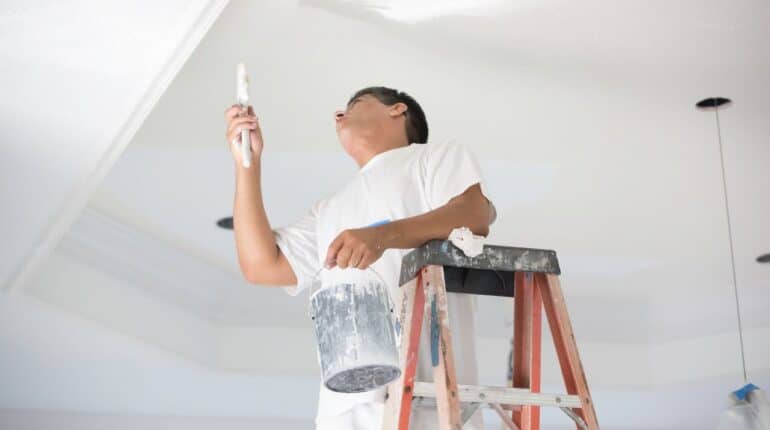
Most people asking how long it takes to paint a house are trying to work out whether they need to move out, how long the kitchen will be off limits, or whether the job will be done before a family event. So here’s the honest answer: a standard three-bedroom house takes a professional team around 3–5 days for the interior, or 5–7 days for the exterior. Combine both, and you’re planning for 2–3 weeks all up.
But that range exists for a reason. Below we break down the factors that push a job from the fast end to the slow end.
Quick Reference: How Long Does It Take to Paint a House?
| Property Type | Interior | Exterior | Both |
| 1-bed unit | 2-3 days | – | – |
| 2-bed unit | 2-4 days | – | – |
| Medium apartment | 3-5 days | – | – |
| 3-bed single storey | 3-5 days | 5-7 days | 2-3 weeks |
| 4-bed double storey | 7-12 days | 8-14 days | 3-4 weeks |
| Heritage or large home | 2-3 weeks | 2-4 weeks | 1-2 months |
Keep in mind these are professional timeframes. DIY timelines run roughly three to four times longer.
How Long Does It Take to Paint a Room?
Units and Apartments
Small apartments move quickly. A one-bedroom unit is typically done in 2–3 days. Two-bedroom units might add a day or two, depending on the condition of the surfaces and the amount of prep needed. Medium apartments in the 60–90 square-metre range can take up to 5 days to complete.
Three-Bedroom Homes
Interior painting on a standard three-bedroom home takes 3–5 days with a professional crew, while the exterior needs 5–7 days. Heritage homes in suburbs like Hamilton or Merewether, with their detailed trim and older surfaces that need more careful preparation, sit at the longer end of both ranges.
If you’re doing interior and exterior together, plan for 2–3 weeks. It might be more convenient to move out during this process if you have somewhere to stay, but we work with plenty of families who decide to stay in the home, moving room to room as each area is completed.
Four and Five-Bedroom Homes
Larger two-storey homes are a different case altogether. Interior work runs 7–12 days; exterior 8–14 days. Five-bedroom homes with high ceilings or period features can push the interior alone to 8–10 days. The extra time adds up when you think about all the additional trim, the access challenges on upper levels, and the preparation that older or larger homes typically need.
Heritage Properties
Heritage homes need patience. Period details like ornate cornices and original timber weatherboards require careful handwork that can’t be rushed. Expect 2–3 weeks for interior painting and 2–4 weeks for exterior on a substantial heritage property. Budget 1–2 months if you’re doing both.
How Long Does It Take to Paint a Room?
A standard 3.2mx3m bedroom takes a professional 4–6 hours. That includes moving furniture, protecting floors, cutting in around the edges, rolling the walls, and cleaning up. Most rooms need two coats, so the drying time between coats adds to the overall day.
DIY painters doing the same room should budget 8–16 hours — spread across a weekend once you factor in learning as you go, slower cutting in, and the extra passes needed to get an even finish.
- Ceilings: Two coats take up to 6 hours total, with 1–4 hours drying time between coats depending on humidity. We always paint ceilings before walls since drips on freshly painted walls are a frustrating way to add hours to a job.
- Trim and doors: These take longer than most people expect. In detailed homes, doors, frames and skirting boards can account for half the total project time. An experienced painter can do a single door in about 12 minutes per side; for a DIY painter, a door can easily become a few hours of work.
- Kitchens and bathrooms: Small bathrooms take 4–8 hours, though humidity significantly slows drying. Kitchen cabinets, if you’re having them repainted rather than just the walls, take 5–7 working days for a proper result, though the kitchen itself stays functional throughout.
What Slows a Job Down (and What Speeds It Up)
Preparation
In our experience, prep is where most of the time goes and where most DIY jobs run into trouble. Good surface preparation means washing walls with sugar soap, scraping any flaky paint, filling holes, sanding back, and priming bare or repaired areas.
If you skip or rush prep, the paint will show it in the form of peeling and cracking down the line. For Newcastle homes near the coast, salt residue on exterior surfaces needs to be thoroughly washed off before a single drop of paint goes on. It’s not hard, but it can’t be skipped.
Paint Type and Drying Times
Water-based paints are touch-dry in 30–60 minutes and can be recoated after 2–3 hours. Full cure, meaning the paint hardens completely and can be washed without marking, takes 2–4 weeks. Oil-based paints, on the other hand, take a lot longer. They usually feel dry in 6–8 hours and can be recoated after 16–20 hours, but full cure for oil-based finishes can take a month or more.
Thick coats, high humidity, and temperatures above 35 all affect drying times. Humidity is the main variable in Newcastle summers, and a job that dries in two hours in May can take four in February.
Weather
Rain brings exterior work to an abrupt halt. Surfaces need 24–48 hours to dry after rainfall before painting can begin. Paint is best applied in the sweet spot of temperatures between 10-30 degrees. Any colder, and it might not bond properly. Any warmer, and the paint can dry too quickly and crack before it can level out. This is why exterior painting jobs in summer sometimes start early and pause through the hottest part of the afternoon.
Access
Multi-storey exteriors require scaffolding or elevated work platforms. Setup takes time and limits where the crew can work at any given point. It’s a necessary part of the job on two-storey homes, but it adds time and should be factored into your planning.
Professional vs DIY Timelines
It’s a simple fact that a professional crew can complete the same job much faster than a first-time DIY painter. You might save some money upfront, but it could mean a few months of disrupted living with furniture piled in the middle of rooms while you work over multiple weekends.
The time gap comes down to a few things. Tasks like cutting in take beginners much longer, and they often need to go back over missed edges. An experienced painter rolls a ceiling in one pass with no lines, while DIY attempts frequently need three passes and still show lap marks. Professional-grade rollers, sprayers, and brushes also cover more evenly and hold more paint, reducing the number of passes required.
The more honest case for hiring a professional comes down to the prep work. Knowing which surfaces need priming, how to treat water-stained ceilings so they don’t bleed through, and how to handle the older surfaces common in Newcastle’s housing stock is the kind of knowledge that only comes from doing it hundreds of times.
When it makes sense to call in professionals:
- Multi-storey exteriors where working at height is involved
- Heritage homes with detailed trim and ornate ceilings
- Properties being prepared for sale where finish quality matters
- Any project with a firm deadline
Get an Accurate Timeline for Your Home
Every house is different. A three-bedroom home that’s been freshly renovated with new plasterboard is a very different job to a three-bedroom weatherboard from the 1960s with twelve coats of paint on the doors.
If you’re in Newcastle or Lake Macquarie and want a realistic timeline for your specific property, get in touch with the team here at George.Painting. We’ll take a look and give you an accurate picture of what’s involved, so you can skip the rough guesses.